I actually listened to it as an audiobook. I have lately started to use audiobooks as it’s faster and more pleasant way for me to consume information. I can be out running and exercising or walking in the park and no need to stay in to read a book.
Anyway, Psycho Cybernetics by Dr. Maxwell Maltz is a great book about psychology, human behavior, the way mind works; basically about the flaws of human nature. It’s not specifically about trading, but nevertheless important information regardless of the field you’re in. It definitely got me thinking about my trading but also about life in general.
Dr. Maltz goes deep in how we see ourselves and create a self-image. We need to have some sort of a target in mind to express ourselves and then develop the necessary to reach these targets. He puts much emphasis on the self-image theory, how it can be a game changer whether we succeed or fail in our goal. He presents techniques to improve and manage ones self-image, rehearse and relax to visualize where we want to get and achieve results. The method is very popular today among motivational gurus, self-help teachers but also psychologists. The book was first published in 1960 and has been updated later but the knowledge and human factors remain the same thru time.
My key takeaways from this book are:
- Imagine your self-image in positive aspects. You need to like and be proud of your self-image.
- Success and happiness are habits just like failure and sadness are habits.
- Don’t be consciously anxious about every move, word or action being afraid of what might happen. Be in the moment and do whatever you’d unconsciously do.
- If you set goals, don’t look at them all the time, just follow the process and let things work out in time.
- Don’t worry or think about odds after placing the bet, the time to do this is before the bet. After the decision is made just relax and enjoy. Don’t care about the outcome.
- Don’t push happiness into the future, if you want to be happy you need to be now, not because of.
- React positively with intelligence to solving problems. Stick to your goals no matter what happens.
- Forgive to negative people and events in the past and forget about it. Life is about mental pictures of yourself and your future. Use it daily to unconsciously move towards your goals.
- Happiness and activity, strive for goals are part of a long and healthy life.
Psycho-Cybernetics summary: what the title means
The title borrows from cybernetics, the science of feedback and control that the mathematician Norbert Wiener wrote about in the 1940s. Maltz’s idea is that the brain works like a servo-mechanism, the kind of self-guided device that steers toward a target by going forward, missing, and correcting course. He calls it the success mechanism. The target it steers toward is your self-image: what you believe is possible for someone like you. Change the self-image and the mechanism steers somewhere else. Keep a self-image of failure and the same machinery works as a failure mechanism.
For a trader the useful part is the correcting. A servo-mechanism doesn’t freeze after a miss; it takes the error as information and adjusts. That is what a stop-loss and a trade journal are for. A losing trade is negative feedback, not a verdict on you, as long as the loss was small enough to keep the risk the same on the next one.
Psycho-Cybernetics and the 21-day habit myth
This book is where the “21 days to form a habit” idea comes from, although Maltz never said that. As a cosmetic surgeon he noticed that patients needed some time to get used to a new face, and he wrote: “These, and many other commonly observed phenomena tend to show that it requires a minimum of about 21 days for an old mental image to dissolve and a new one to jell.” Over the years “a minimum of about” got dropped and a mental image became a habit.
The best-known measurement is a 2010 study by Phillippa Lally and colleagues in the European Journal of Social Psychology. 96 people picked a daily eating, drinking or exercise habit and tracked it for 12 weeks. On average it took 66 days for the behavior to become automatic, with a range from 18 to 254 days. Missing a single day did not materially hurt the process. So if you are building a trading routine, say a checklist before the open, plan on two months or more rather than three weeks, and don’t throw it away because you skipped a Tuesday.
Who was Maxwell Maltz?
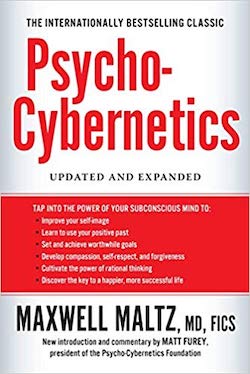
Maxwell Maltz was an American cosmetic surgeon and author, born in New York City in 1899. Psycho-Cybernetics came out in 1960 with Prentice-Hall, and the idea grew out of his surgical work: his patients often expected more from the operation than it gave them, which pointed him to the self-image rather than the face. He died in 1975, aged 76. The book has been reissued several times since; the edition I link to is the updated and expanded one from 2015, edited by Matt Furey.
If you believe in self-help and mindset, want to step up to next level in your professional career, I think it’s a good read to understand what Dr. Maltz was working on already back in the 50s.
Affiliate link: as an Amazon Associate I earn from qualifying purchases. It doesn’t change the verdict.