Blog
Double top pattern: What 56 years of S&P 500 data show
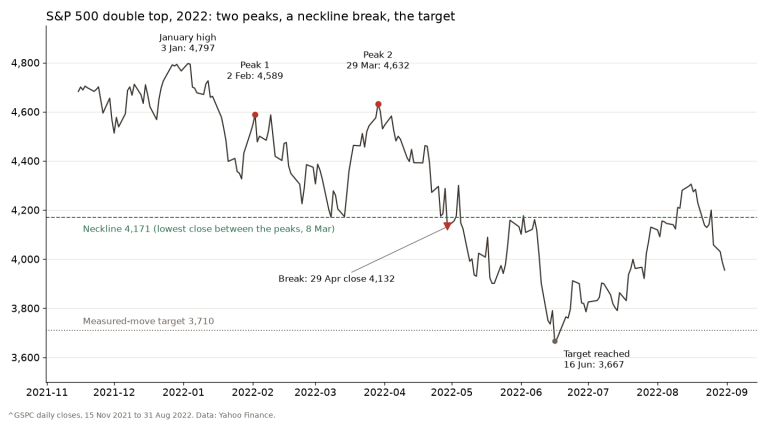
A double top is two peaks at about the same price with a dip between them. It counts as confirmed when price closes below the low of that dip, the…
A trader’s notes on US stocks, options, futures, forex and crypto: technical analysis, risk management and trading psychology, with the stops and targets shown.
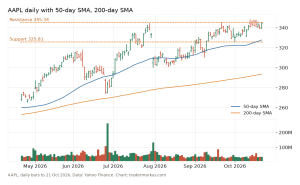
S&P 500, Bitcoin, gold and EUR/USD: the trend, two supports and two resistances, and what would change the picture. Last week’s levels are scored in public.
See this week’s levelsA double top is two peaks at about the same price with a dip between them. It counts as confirmed when price closes below the low of that dip, the…
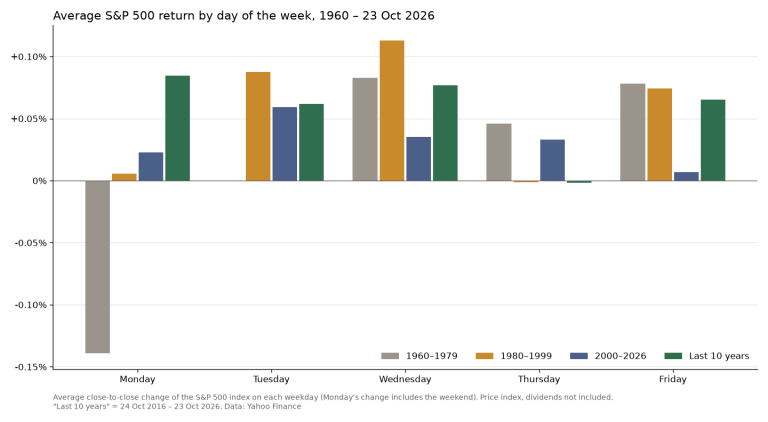
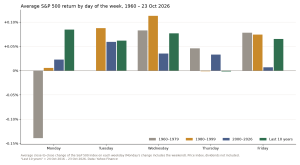
The best day of the week to buy stocks depends on which decades you look at, and for a long-term investor it barely matters. I checked every trading…
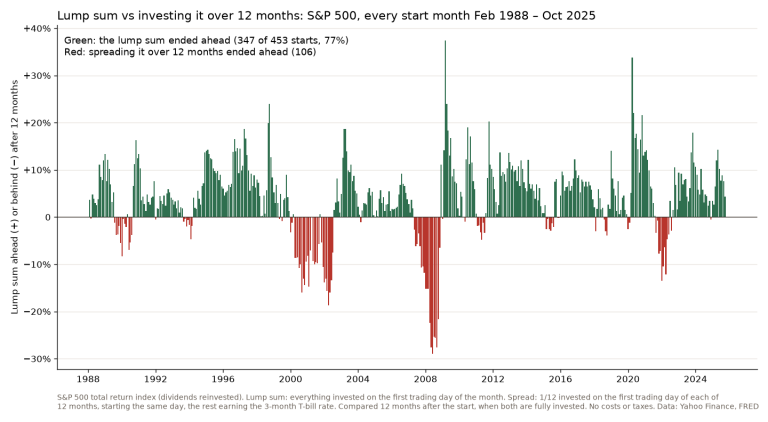
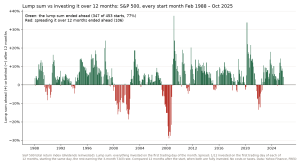
Dollar cost averaging means investing a sum in equal parts over several months instead of all at once. I tested both on the S&P 500 with dividends…
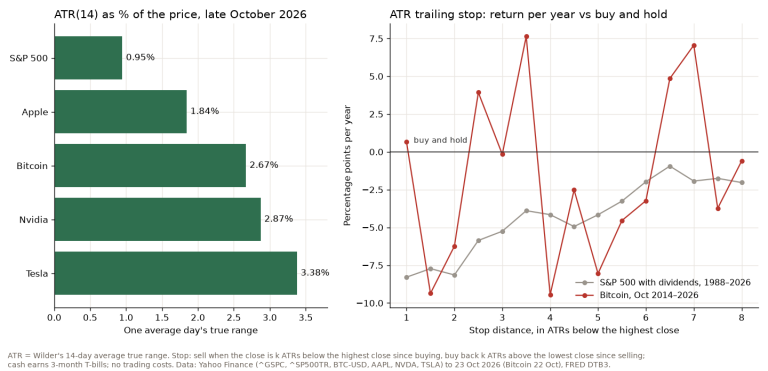
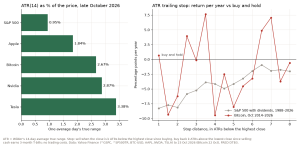
The average true range (ATR) is the average size of a market’s daily move, gaps included. On 23 October 2026 it was 0.95% of the price for the S&P…
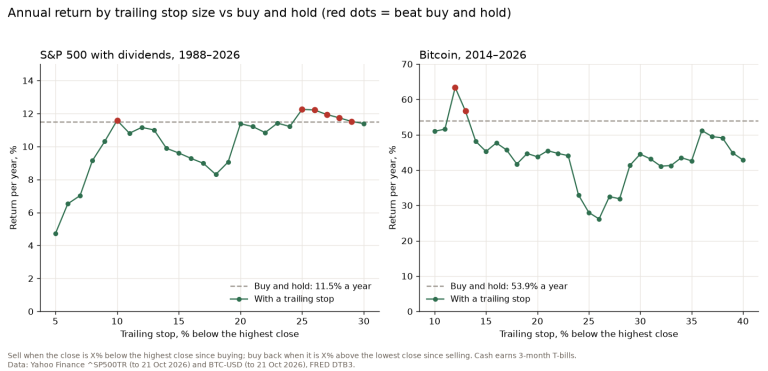
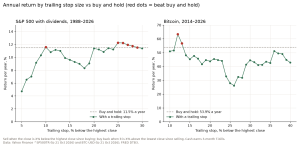
A trailing stop loss sells when the price falls a set percentage below its highest point since you bought. I tested every size from 5% to 30% on the…
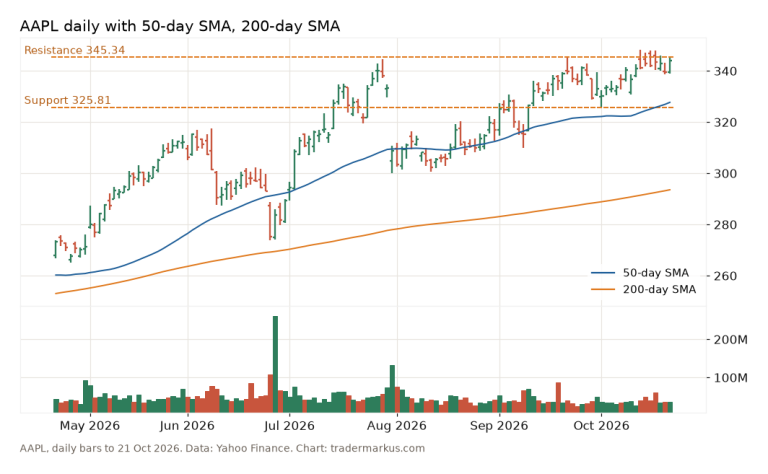
To read a stock chart, start with the time frame, then look at each bar’s open, high, low and close, then at the trend, the support and resistance…
A double top is two peaks at about the same price with a dip between them. It counts as confirmed when price closes below the low of that dip, the…
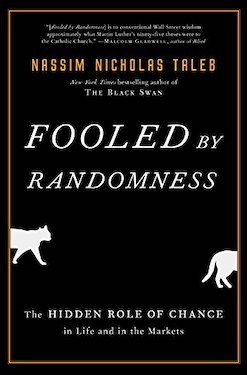
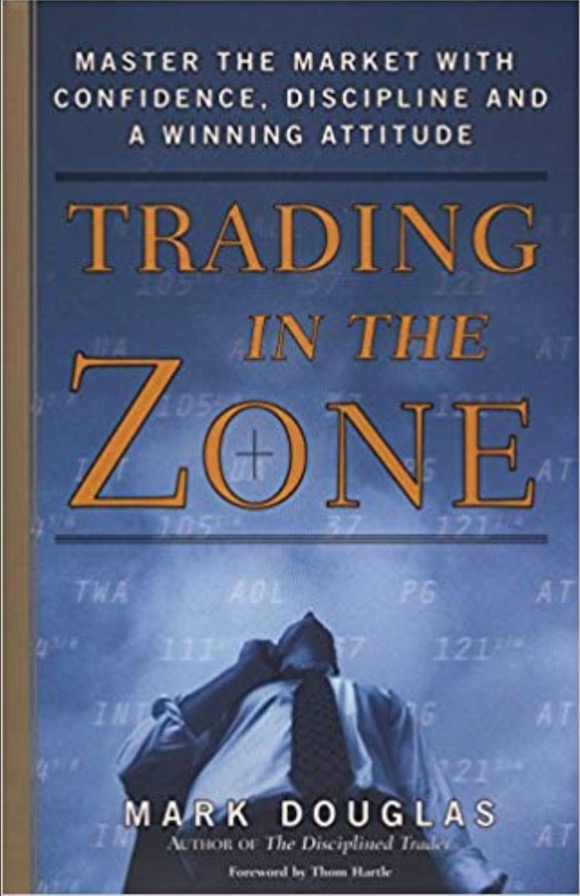
Recommended — about bias, probability and luck; newer traders should read it twice.
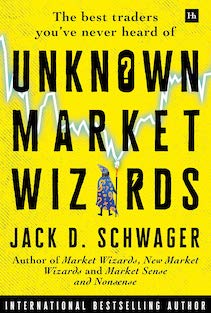
I enjoyed it and recommend it; fans of earlier Market Wizards books will be eager.
There are more good insights; I recommend it if you want to trade in the zone.
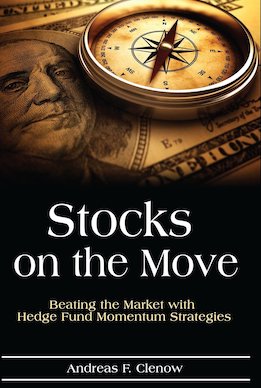
An educational read if you want to study systematic momentum trading in stocks.
Drawdowns are an inevitable part of taking risk; surviving them within expected ranges is nothing to regret.
Accounts are in drawdown most of the time; know your strategy's expected distribution and stick with it.
Market outcomes are random; follow your trading plan and judge the process rather than individual results.
Take small losses to preserve capital so you can make big profits when the right time comes.
Respect your plan's profit targets, and exit losing trades quickly; re-entry is only a commission away.
About ten years in the markets, trading US stocks, options, futures, forex and crypto. The tools, the tests and the mistakes are all on this blog.
Type a word or a book title. Titles, excerpts and tags are searched.