It’s been a while since my last post. I’ve been enjoying summer and spending time outdoors. I’ll share some recent thoughts.
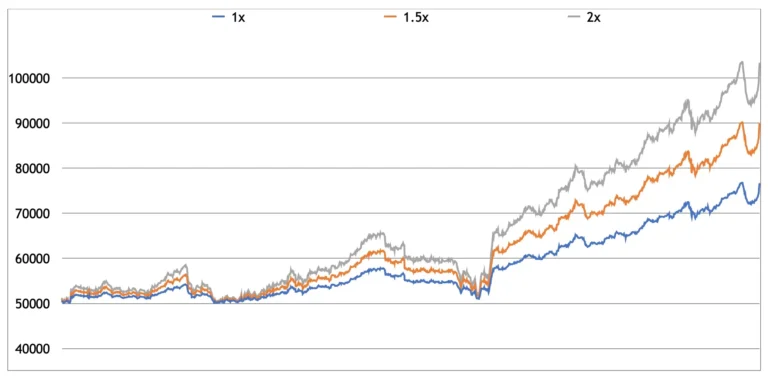
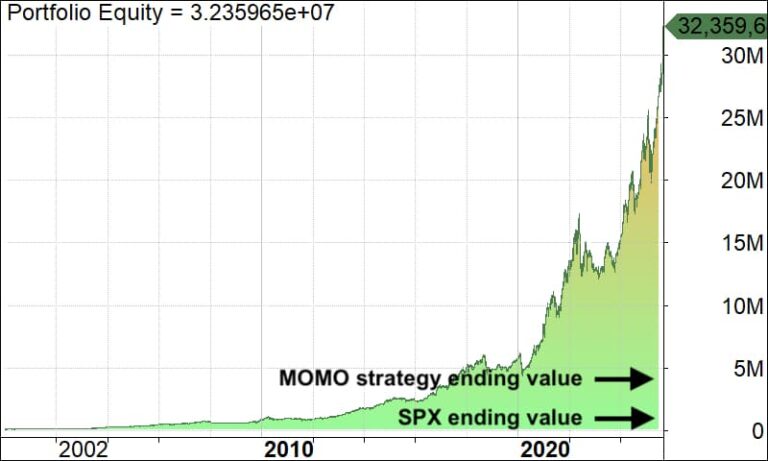
I was crunching numbers and letting the backtest software do some heavy computing the other day. I have reliable price data for US stocks that is also free of survivorship bias going back to 1990. So I can test my ideas on 35 years of historical data on all stocks including what were once trading, but got delisted later. It’s not a hard task to come up with a decent strategy that had 50% CAGR in the past but I need to be extremely mindful that it was actually the past. It doesn’t show me future returns. This doesn’t apply to my backtest only, it applies to all the opinions and analyses online that are based on historical charts and documents.
People tend to fall a victim to this popular line that is usually in a small italic print below some investing content for compliance, so I need to bring it up here in large and bold, cause it’s true:
Past performance is not indicative of future results.
Period. It doesn’t matter if it’s Apple’s stock, gold, bitcoin, a friend’s portfolio, my backtest or S&P 500 index. Measuring what has already happened in the past and making statements about the future is such a poor way to manage money in the markets. It’s a sign of a missing process. Without a good process in mind and focusing on past data alone will end bad in a matter of time.
Some popular ideas that are NOT part of my process:
- I will buy more if the stock becomes cheaper.
- Why is it dropping if the news was good.
- It will eventually go back up again.
- Everyone else is buying that stock.
- I won’t sell before it comes back to breakeven.
- I will hold it for the long-term.
I recently heard a thought from Morgan Housel that individual investors think the most important part of investing is knowing the financial information, fundamentals, news and reports, while it’s actually the behavioral aspect that is much more important for success in the markets – how the investor behaves with money, savings, decision-making and discipline.
Hot stock picks and predicting the FED’s next move sell so much better to the crowd, though. In the trading space I feel quite lonely. Which is good, I think. I understand that making good money in the market needs to be anti-social. The less I know, the better. It keeps me out of behavioral mistakes.
“As they say in poker, ‘If you’ve been in the game 30 minutes and you don’t know who the patsy is, you’re the patsy”
(Warren Buffett)
I have no idea what the indexes are doing. I trade single stocks only, cause it gives more opportunities. Indexes can go up and can go down, but I do know that “let me hold all 500 largest stocks at any given point of time despite their conditions” does not match my views about portfolio and risk management. In 2011, nobody was telling me about the indexes. It’s not that there weren’t any, they just hadn’t been performing well. It took a few more years for the crowd to jump on the performance chase.
There are two psychological things going on here:
1. Recency bias – the index has had a good return over the recent years
2. Confirmation bias – everyone is talking about it and saying it’s the best investment ever
While 10-15 years ago it might have sounded absurd to just blindly hold 500 largest stocks despite how the companies were doing, today it sounds like the best thing after sliced bread, because people are performance chasers by human nature. It can keep on going for several more years, but the psychological pitfalls by investors get punished when the market regime eventually changes. I’m not a perma bear. I also hold (and sell) stocks in my portfolio, just not blindly fingers crossed. If it isn’t performance chasing, then why is everybody talking about the US indexes, while other countries haven’t performed like this.
As time goes by, it’s becoming harder to find a trading related podcast or book that is actually worth consuming for me. I’m thinking of new strategic ideas to test, but I’ve gone through so many books, blogs, forums and even chats with AI to maybe get some new spark of creativity, which has made that part of the process more difficult over time. But I do have some uncorrelated strategies in different timeframes, long and short that work on promising principles and a good foundation of beliefs about how I see the stock market operate. Now I only need to forget about short-term results, forget about the daily noise and just make sure the system is running everyday.
What does “past performance is not indicative of future results” mean?
It means that a return you can see in the past – a fund’s last five years, a stock’s run, a backtest – describes what happened, not what will happen. The same numbers can repeat, get better or turn negative, and the past record doesn’t tell you which. “Past performance does not guarantee future results” and “past results are not indicative of future results” are the same warning in different words.
It’s everywhere because it’s required. In the US, a mutual fund ad that quotes performance has to carry a legend saying the data represents past performance and that past performance does not guarantee future results. That’s the SEC’s rule for fund advertising, 17 CFR 230.482. So most people see the sentence as small print and skip it. I think it deserves a closer look, so I tested it.
Is it true? What 55 years of S&P 500 returns say
I took the S&P 500’s yearly price returns from 1971 to 2025 (Yahoo Finance closes, no dividends) and asked a simple question: does a great year tell you anything about the next one? The correlation between one year’s return and the next was −0.06. That is as close to “no relationship” as real data gets.
The 14 best years in that period, the top quarter, each gained 23% or more, and the 14 worst gained 0.3% or less. Here is what came next (“next avg” is the average return of the following year, “next up” how often it rose):
| After | Years | Next avg | Next up |
|---|---|---|---|
| Any year | 54 | +9.5% | 74% |
| Best 25% | 14 | +10.1% | 79% |
| Worst 25% | 14 | +12.0% | 79% |
A great year was followed by an ordinary year on average, and so was a bad one. Some top years were followed by more gains (1997: +31%, then +27%), some by losses (2021: +27%, then −19%). The decades make the same point with bigger numbers: the S&P 500 went from 353 at the end of 1989 to 1,469 at the end of 1999, about 15% a year. Anyone who took that as the normal rate then watched it end 2009 at 1,115, 24% lower than ten years earlier.
An example from my own backtests
In December 2021 I published a market timing rule for the Nasdaq 100 (QQQ): be in the market when the month-end close is above the 200-day moving average, be in cash when it’s below. From 2000 to 2021 the backtest made 7.24% a year against 6.86% for buy and hold, with a maximum drawdown of −43.7% against −86.2%.
Then I reran it on the years after the post, 2022 to September 2026. The timing rule made 13.4% a year and buy and hold made 14.1%. The small return edge from the backtest was gone. The drawdown protection held: −15.1% against −35.2%. Same rule, same market. Part of the past repeated and part didn’t, and I couldn’t have told you in 2021 which part it would be.
So is past performance useless?
No. It’s the only data anyone has, including me. The mistake is using it as a forecast of returns. I use it to learn how bad things can get: how deep the drawdowns were, how long they lasted, how often a rule was wrong. That tells me how much to put into a strategy so I can stick with it when it goes through a bad spell (more on that in every trading strategy has drawdowns). The return number I treat as a rough hint, not a promise. That’s also why a backtest can’t forecast the future, however good it looks.
Not financial advice. This is educational content, shared for information and entertainment only, and it is not a recommendation to buy or sell any asset. Backtests and past results do not guarantee future results, and the numbers or charts here may contain mistakes. Trading carries risk, including losing all the money you put in. Do your own research before you make any decision.