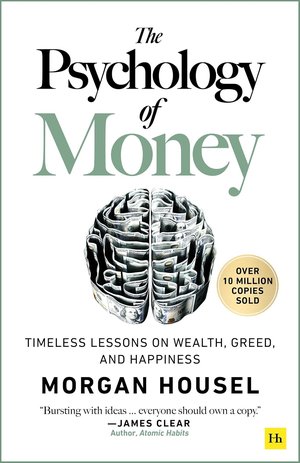
The Psychology of Money is worth reading, and it is one of the few money books I would hand to someone who has never traded. Morgan Housel’s point is simple: doing well with money depends less on how smart you are and more on how you behave. It is not a trading book and has no charts or setups, but almost every chapter maps onto a mistake I have watched traders make, myself included.
The book was published by Harriman House on 8 September 2020. Housel is a partner at the Collaborative Fund and a former columnist at The Motley Fool and The Wall Street Journal. He started writing about finance in early 2008, right as the financial crisis began, and says in the introduction that trying to explain that crisis pushed him toward psychology and history rather than formulas. The book grew out of a 2018 report of the same name, which listed 20 flaws and biases that hurt people’s money decisions. The publisher now puts sales at over 10 million copies.
What is The Psychology of Money about?
It is 20 short chapters plus a postscript, about 250 pages, and each chapter stands on its own. The publisher counts 19 short stories; the twentieth chapter is called Confessions. He jokes in the introduction that it is not a long book, and he is right. The chapters have titles like Luck & Risk, Never Enough, Confounding Compounding, Tails, You Win, Wealth is What You Don’t See, Reasonable > Rational and Room for Error. There is very little math. It is stories, history and one observation per chapter about why people do what they do with money.
The opening chapter, No One’s Crazy, sets the tone. Your own experience with money is a tiny slice of what has happened in the world, but it shapes most of how you think the world works. He cites research by the economists Ulrike Malmendier and Stefan Nagel, which found that people’s willingness to take risk with their investments is anchored to what markets did when they were young. Someone who came of age in a strong stock market holds more stocks for life. I recognized that one straight away. The first year you trade teaches you what “normal” is, and the market spends the next years correcting you.
The janitor and the Merrill Lynch executive
The introduction tells two stories side by side. Ronald Read fixed cars at a gas station for 25 years and swept floors at JCPenney for 17. He saved what little he could, bought blue chip stocks and waited. When he died in 2014 at 92, his estate was worth more than $8 million, and he left over $6 million of it to his local hospital and library. Richard Fuscone was a Harvard-educated Merrill Lynch executive with an MBA who retired in his 40s. He borrowed heavily to expand a huge house in Greenwich, Connecticut, the 2008 crisis hit, and he went bankrupt.
Housel’s comment is that Read was patient and Fuscone was greedy, and that was enough to beat the whole gap in education and experience. He adds that you would never hear a story of a janitor outperforming a heart surgeon, but in investing it happens. For a trader this is uncomfortable. Knowing more indicators won’t close that gap. Avoiding the one stupid thing that takes you out of the game will.
Lessons for traders
Compounding needs time more than skill
In Confounding Compounding Housel points out that about $81.5 billion of Warren Buffett’s $84.5 billion net worth came after his 65th birthday. “His skill is investing, but his secret is time,” he writes. Traders love to talk about returns and rarely about duration. A strategy that makes a modest return every year for twenty years beats one that doubles the account and then blows it up. I wrote about the same idea from the other side in cut losses quickly, let profits run: the small loss is what keeps you around long enough for compounding to matter.
Getting wealthy vs staying wealthy
This chapter separates two skills. Getting money takes risk, optimism and nerve. Keeping it takes the opposite: humility, fear that it could all go away, and the habit of not betting what you can’t afford to lose. Housel’s view is that survival is the part people underrate. I agree completely. The trader who risks 1% a trade looks boring next to the one posting screenshots of a 300% month, until the second one has a bad week. Position size is the survival skill, and it is the least exciting thing in trading.
Tails, you win
A small number of events drive most of the outcomes. In his essay of the same name, Housel notes that from 1980 to 2014 about 40% of the stocks in the Russell 3000 lost at least 70% of their value and never recovered, while effectively all of the index’s return came from 7% of its members. This is the chapter a trend follower will nod along to. Most trades are small losses or small wins, and a handful of big trends pay for all of them. If you cut those few winners early because you “want to lock something in”, you have removed the part of the distribution that makes the strategy work.
Room for error
Housel borrows Benjamin Graham’s idea of a margin of safety and applies it to everything: savings, plans, expectations. Leave room for the world to be worse than your forecast, because it will be sometimes. For a trader the translation is direct: a stop that is not too tight, leverage low enough that a gap against you is painful but not fatal, and a drawdown you have planned for before it happens. Nobody plans for the losing streak until they are in it.
What I didn’t like
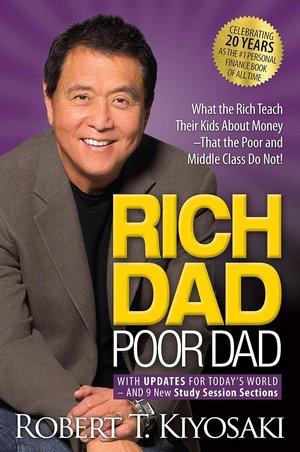
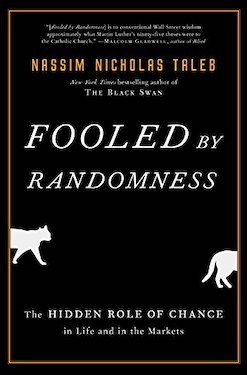
Some chapters overlap and a few read like blog posts, which they partly were. If you have read Daniel Kahneman’s Thinking, Fast and Slow or Nassim Taleb’s Fooled by Randomness, the ideas on luck, risk and bias will not be new. Housel is a writer first, and he explains them more lightly than either of those two. There is also nothing practical for a trader: no rules, no numbers to test. It tells you why you behave badly with money, not what to do on Monday morning. The chapters on saving and on spending to impress others are aimed at personal finance more than markets, in the same spirit as Bill Perkins’s Die with Zero, though the two books reach almost opposite conclusions about spending. Robert Kiyosaki’s Rich Dad Poor Dad is the louder classic of the genre: the same idea that money should work for you, with far more confidence and almost nothing on risk.
My verdict: read it, especially if you are new to markets or you know someone who is. It is short and well written, and it puts behavior ahead of cleverness, which is where it belongs. Experienced traders will not learn a new technique here, but they may recognize a few of their own worst habits in it. I did. The lesson I keep coming back to is the Buffett one: skill gets you returns, time turns them into wealth, and you only get the time if you don’t blow up first.
Affiliate link: as an Amazon Associate I earn from qualifying purchases. It doesn’t change the verdict.