Think and Grow Rich is Napoleon Hill’s 1937 book about the mindset he said rich people share, boiled down to 13 steps that start with a burning desire for money and end with a “sixth sense”. It is one of the best-selling self-help books ever written. As a trader I found a few useful habits in it, a lot of wishful thinking, and an author whose own story doesn’t hold up well.
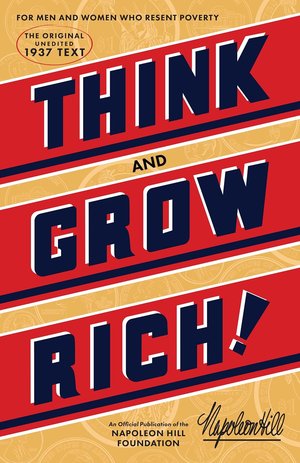
The book came out in 1937, during the Great Depression, and Rosa Lee Beeland, Hill’s wife at the time, contributed substantially to writing and editing it. Hill said it grew out of more than twenty years of studying people who had built fortunes, and that the whole project started with a suggestion from Andrew Carnegie. The edition I link below is the official Napoleon Hill Foundation paperback from Sound Wisdom (2016), which reprints the original 1937 text.
Think and Grow Rich summary
The main idea is that anyone can become rich by following a set of principles, and that the process starts in the head. You fix a definite goal, believe you will reach it, keep repeating that goal and that belief to yourself, and then make a plan and act on it without giving up. Hill illustrates each step with stories of people who, he says, did exactly that.
It is less a book about money than about motivation. There is almost nothing on investing, saving or managing risk. The “riches” can be money, but the method is the same for any goal: a definite purpose, a plan, persistence and the right people around you.
What are the 13 steps in Think and Grow Rich?
Hill calls them the 13 steps to riches. In the order of the book:
- Desire: a definite, burning want for a specific goal.
- Faith: believing you will reach it.
- Autosuggestion: repeating your goal and your belief in it to yourself.
- Specialized knowledge: learning what you actually need to know.
- Imagination: turning the desire into ideas and plans.
- Organized planning: a concrete plan of action.
- Decision: making up your mind and following through.
- Persistence: keeping going after setbacks.
- Power of the Master Mind: working with a group of people who help you get there.
- The mystery of sex transmutation: redirecting sexual energy into work.
- The subconscious mind.
- The brain.
- The sixth sense: intuition.
The book closes with a chapter on the six ghosts of fear, the fears Hill says stop people from acting: fear of poverty, criticism, ill health, loss of love, old age and death.
What I took from it as a trader
Steps 4 to 8 are the good part, and they are ordinary. Know your field, write the plan down, decide, and keep going when it doesn’t work at first. That is how anyone gets competent at trading. A written plan with entry, stop and size is worth more than any amount of believing, and a trading journal is the place where the plan meets what you actually did.
The Master Mind is the other idea I agree with, even if Hill makes it sound mystical. Trading alone at home is lonely and you start believing your own charts. When I joined a group of traders years ago I wrote about how much it helps to talk to other traders, mostly because they disagree with you. Hill’s version is a group that shares your goal. Mine is a group that tells me when my idea is bad.
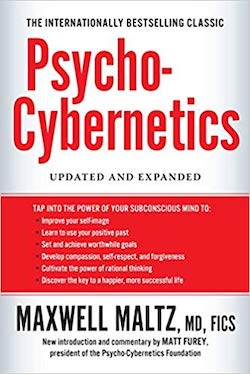
Autosuggestion is closer to Psycho-Cybernetics, which came later and explains the self-image part better. Repeating a goal to yourself does change behavior. But a trader has to be careful what he repeats. “I will make $100,000 this year” is exactly the kind of sentence that makes people size up after a loss to get back on schedule.
Where I disagree
Faith is the step I like least. In the markets, unwavering belief in your position is how a small loss becomes a big one. What works is the opposite: a firm plan and a loose opinion, ready to admit you are wrong at the stop. Trading in the Zone says something much more useful about belief: believe in your edge over many trades, never in the outcome of the next one.
The second problem is the evidence. Hill studied people who got rich and found that they had a burning desire and never gave up. He didn’t count the people with the same desire and persistence who went broke. That is survivorship bias, the thing Fooled by Randomness is about, and it is as true of trading gurus today as it was of Hill’s millionaires.
The third is Hill himself. His claim that Andrew Carnegie gave him the idea in 1908 only appeared after Carnegie died in 1919, and Carnegie’s biographer David Nasaw “found no evidence of any sort that Carnegie and Hill ever met”. According to his Wikipedia entry, there are no known records of Hill meeting most of the famous men he said he interviewed, apart from a brief encounter with Thomas Edison. Before the book, Hill’s own career included a lumber company that ended in fraud charges in 1908 and a school in Illinois where warrants were issued for his arrest in 1918 over selling its shares. Matt Novak’s long 2016 Gizmodo investigation goes through it all. A book about how to get rich, written by a man whose businesses mostly failed, is a good reminder to check who is selling the method.
Is Think and Grow Rich worth reading?
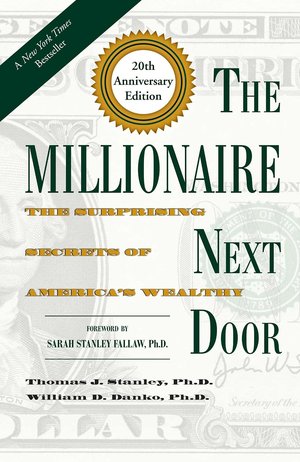
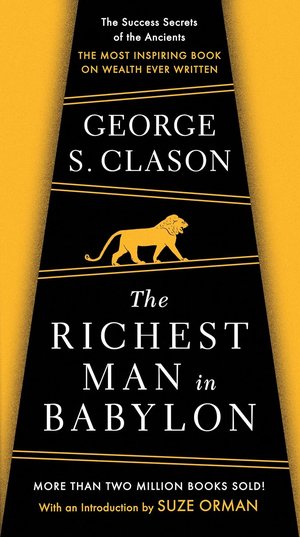
Once, if you are curious why it is still everywhere, and with a pencil to cross out the parts you can’t test. The goal-setting and persistence chapters are fine, and the Master Mind idea is good. The rest is either mysticism or claims nobody can check. If you want a money book from the same years with advice you can actually use, The Richest Man in Babylon (1926) is shorter and asks you to believe nothing. The Millionaire Next Door came almost sixty years later and at least surveyed real millionaires.
My verdict: a motivational classic that is worth reading for its history and its handful of good habits, not as a method. Take the definite goal, the written plan and the people around you. Leave the faith at the door before you place a trade.
Affiliate link: as an Amazon Associate I earn from qualifying purchases. It doesn’t change the verdict.