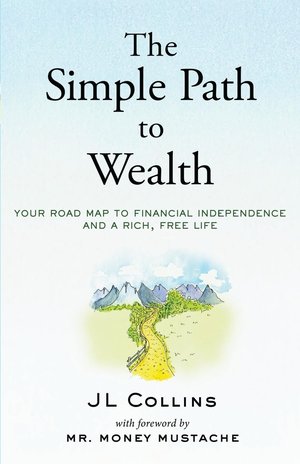
The Simple Path to Wealth is JL Collins’s plan for getting rich slowly: stay out of debt, spend much less than you earn, put the rest into one broad stock index fund and leave it alone, through every crash. I’m a trader, and I don’t hold my money this way. I still think it is one of the best money books for people who don’t want to become traders, and the part I disagree with is smaller than it first looks.
JL Collins spent most of his career in magazine publishing. In 2011 he started a blog, jlcollinsnh.com, to write down for his daughter what he had learned about money, and its Stock Series became popular in the financial independence crowd. The book grew out of those posts and letters and came out in June 2016, with a foreword by Mr. Money Mustache. A revised and expanded edition followed in 2025, published by Authors Equity. The paperback I link below is the original 2016 edition.
The Simple Path to Wealth summary
The whole book rests on three habits: avoid debt, live on less than you earn, and invest the difference. Collins suggests saving a big share of income, half if you can, because the savings rate decides how fast you get free, not the cleverness of your investments.
The investing part is just as short. Buy a total US stock market index fund (his example is Vanguard’s VTSAX), keep buying, and don’t sell when the market falls. The fund owns essentially every listed US company, so the ones that fail shrink out of it and the winners grow into it on their own. No stock picking, no market timing, no expensive advisers. He reached financial independence himself by picking stocks and active funds, came to index funds slowly after a friend introduced him to them in the 1980s, and says indexing would have been easier and better.
A central idea is what he calls F-You money: enough savings that you can say no to a job or a boss and make bolder choices. It’s not necessarily enough to never work again, and that is the point. Freedom starts long before retirement.
The last part is called “What to do when you get there”. On his blog, where the book comes from, he splits life into two stages: while you’re still earning, all stocks; once you live off the portfolio, add a bond fund to smooth the ride. In interviews he calls the 4% rule more a guideline than a rule.
What I agree with
Almost all of it. The savings rate is the one number you control. Costs and fees eat returns quietly every year. And the behavior matters more than the knowledge, which I wrote myself in past performance is not indicative of future results: the investor who sits still through a crash beats the one who knows more and panics.
Collins is honest about panicking himself. He sold after the October 1987 crash and regretted it, and a lot of what he writes is about not doing the same. My own tests on this site keep landing on his side. From 1988 to today, with dividends, the S&P 500 made about 11.4% a year, and none of the timing rules I tested, from the 200-day moving average to waiting for dips in buy the dip, beat simply holding on return. For someone who doesn’t want to trade, I can’t offer a better default than his.
Where I disagree
The Stock Series has a post called “The market always goes up”. Over the long run the US market has, but “always” is doing a lot of work in that sentence. Japan’s Nikkei 225 closed at 38,915.87 on 29 December 1989 and didn’t close above that level again until 22 February 2024, 34 years later. The Nasdaq-100 took more than 15 years to get back above its 2000 high. A book written in 2016 by an American investor naturally looks back at the US record, which has been a very good one. I wrote last year that people only started talking about index funds after the indexes had done well, and I still think a lot of the enthusiasm is performance chasing.
Collins does deal with crashes, and his answer is to keep buying through them. That works if you have decades, a salary and the nerves. It works less well if the long flat stretch arrives right when you start living off the money, which is the sequence of returns risk I tested separately. His bond stage is meant for that, and I would take it seriously rather than staying all in stocks out of habit.
My own way is different: I trade single stocks with rules, and I don’t like holding everything in an index regardless of what each company is doing. But that is a job I chose, with its own drawdowns. It is not a better path for most people, just a different one.
Is The Simple Path to Wealth worth reading?
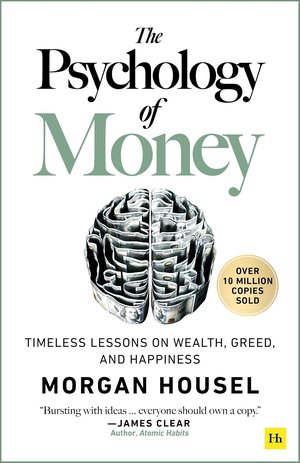
Yes, especially if you are starting out, if you are drowning in money advice, or if you have savings and keep fiddling with them. It is a plain book, and the plan itself fits on an index card. If you trade, read it for the part of your money that isn’t in the trading account. It pairs well with The Psychology of Money, which covers the behavior side, and with A Random Walk Down Wall Street, which makes the case for index funds with more history and theory.
Is VTSAX still the right fund?
The book names a Vanguard fund because Collins used Vanguard, but the idea is a low-cost fund that holds the whole market, and other providers offer the same. Outside the US, a global index fund does the same job. Check the costs and the tax rules where you live; the principle matters more than the ticker.
My verdict: the best plain-English plan for people who want their money to grow without making markets their hobby. Spend less than you earn, own the whole market, and don’t sell in a panic. Just don’t read “the market always goes up” as a promise about any one country or any one decade.
Affiliate link: as an Amazon Associate I earn from qualifying purchases. It doesn’t change the verdict.