The Richest Man in Babylon is a book of short money parables set in ancient Babylon, and its whole message fits in one sentence: keep at least a tenth of what you earn, put it to work, and don’t lose it. I read it as a trader, and the part that stayed with me isn’t the saving. It’s how much of a 1926 book is about not losing money to bad advice and big promises.
George S. Clason (1874–1957) was not a financier. He ran a map company in Denver that, according to his Wikipedia entry, published the first road atlas of the United States and Canada. The Babylon parables were first handed out as pamphlets by banks and insurance companies and were collected into a book in 1926. The original text is in the public domain and free on Wikisource. The paperback I link below is the 144-page edition with an introduction by Suze Orman.
The Richest Man in Babylon summary
The book is a string of stories, each with a lesson. The main character is Arkad, who started as a poor scribe copying laws onto clay tablets and became the richest man in the city. His teacher is Algamish, a money lender, who tells him that a part of all he earns is his to keep. Arkad saves a tenth, loses it once on a bad tip, saves again, and builds his wealth from there. Later chapters bring in other characters: a spearmaker who gets a windfall and doesn’t know whether to lend it to his sister’s husband, a camel trader who comes back from slavery with debts, and a set of clay tablets with a repayment plan.
That plan is the most practical page in the book. Dabasir, the camel trader, lives on seven-tenths of what he earns, pays two-tenths to his creditors and keeps one-tenth for himself, even in a lean month when he earns only eleven pieces of silver. It is a budget with a debt schedule, told as a story.
What are the 7 rules in The Richest Man in Babylon?
They are the Seven Cures for a Lean Purse, which Arkad teaches over seven days. In the 1926 wording:
- Start thy purse to fattening (save at least a tenth).
- Control thy expenditures.
- Make thy gold multiply.
- Guard thy treasures from loss.
- Make of thy dwelling a profitable investment.
- Insure a future income.
- Increase thy ability to earn.
A later chapter adds the Five Laws of Gold, carved on a clay tablet that a father gives his son. The first two repeat the first cures: save at least a tenth and put it to work. The last three are all about losing it: gold stays with the cautious owner who takes advice from people who know, it slips away from the man who invests in things he doesn’t understand, and it “flees the man who would force it to impossible earnings.”
What I took from it as a trader
Count the lessons and you notice that more of them are about not losing than about making. Arkad’s first savings go to Azmur, a brickmaker, who promises to buy rare jewels on a trip abroad. He comes back with glass. Algamish’s answer is the line I remember best from the book: why trust a brickmaker’s knowledge about jewels? That is every tip from a friend, a forum or a chat group about a market the tipper doesn’t trade. The right question isn’t whether the idea sounds good. It’s whether the person has actually done this before.
The fifth law reads like a description of how traders blow up. Nobody loses an account by aiming for a sensible return. They lose it by sizing up to get a big one quickly. I ran the numbers on that in my risk of ruin simulation: with a solid edge, 1–2% risk per trade almost never halved the account, and at 10% per trade the same edge halved it in up to 47% of the runs. Clason didn’t need a simulation to see it.
The first cure also has a trading version. Saving a tenth only works because it is automatic and boring, and the same is true of risking a fixed small amount on every trade. The habit matters more than the exact number, and both are dull enough that most people drop them after a good month.
Where I disagree
The fourth cure says to invest only where your principal is safe. Taken literally, that rules out stocks, and I don’t think it ages well. Over decades, keeping all your savings where the principal can’t fall has cost people more than the market’s drops did. I’d translate it into what I actually do: decide in advance how much you can lose on any one idea, and accept that the rest of the money will move up and down.
The fifth cure, owning your home, is good advice for a lot of people but it isn’t an investment rule for everyone. And the advice to invest only with the help of men experienced in handling gold is easy to write and hard to follow, because the confident ones and the competent ones aren’t always the same people. The book’s own brickmaker shows the problem; it doesn’t solve it. Finally, it is a thin book of parables with a lot of “thee” and “thou”. If you want the same ideas with modern evidence, The Psychology of Money covers saving and behavior better.
Is The Richest Man in Babylon worth reading?
Yes, if you are starting out with money, or if you know someone who is. It takes an evening, it doesn’t sell you anything, and the habits in it are the ones that make every later decision easier. It is not a book about investing or trading in any technical sense, so if you already save, budget and keep your losses small, you won’t learn a method here. Compared with Rich Dad Poor Dad, another story-driven money book, it is calmer and promises less, which I count in its favor.
Is The Richest Man in Babylon based on a true story?
No. Arkad, Algamish and the others are invented characters, and the stories are parables written in the 1920s and set in ancient Babylon. The setting is decoration; the advice is about American wages, savings and debts of Clason’s own time, and most of it still applies.
My verdict: read it once, early, and keep the brickmaker story in mind every time someone offers you a tip. Save a tenth, put it to work, and spend more of your attention on not losing it than on making it grow fast. That part is as true for a trading account as for a Babylonian purse.
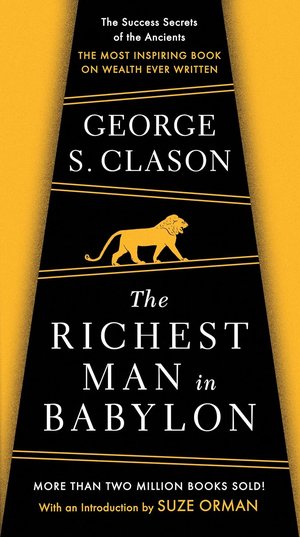
Affiliate link: as an Amazon Associate I earn from qualifying purchases. It doesn’t change the verdict.